
Seminole County Arrest Feed
The sheriff's office runs its inmate search through an InteropWeb portal with three views. Each answers a different question. Current Inmates shows who is in the jail right now. Inmates Booked Last 24 Hours is the rolling intake feed. Inmates by Arrest Date takes a date range. It can pull up both current and released records. None of these is a court docket, and a row may credit SCSO, the Donalsonville Police Department, or another agency. The county jail holds people for several departments.
Timing is loose. No page promises real-time updates or an exact posting hour. Intake, fingerprinting, review, and vendor delays can all hold up a new row. The arrest date on a row is not the moment it hit the web. Pick the window that fits your question first. Then compare another official view if the person you want is missing.
Keep the three windows separate in your head. A newly booked person may flash through the rolling feed and leave custody within hours. A current inmate might have been booked days before that window began. Released rows can survive in the arrest-date search after they drop off Current Inmates. Note which view you searched, the dates you picked, and the status shown. That small record sharpens any later call or public-records request.
| Official view | Custody window | Best use |
|---|---|---|
| Current Inmates | People shown in present jail custody | Confirm a current hold |
| 24 Hour Arrests | Rolling recent bookings | Check a new intake |
| Arrest Log | User-selected arrest dates | Find an older or released row |
New Seminole County Arrests
Someone arrested last night tends to surface first in the 24-hour view. The portal sets no time-of-day cutoff, though. No match there? Check Current Inmates, then try the arrest-date search. A quick release can pull a record off the current-custody list. The date-range row still stands, however. For release or transfer alerts on one person, run the VINELink Check after the jail source.
There is no inmate-search app. InteropWeb is the browser portal linked from the official SCSO site. Hyper-Reach, also linked by SCSO, sends emergency and community alerts. It carries no arrest, warrant, photo, or release data. Watch for name collisions, too. Seminole County also exists in Florida and Oklahoma. Confirm the Georgia SCSO link before trusting a result.
Search Seminole County Jail Roster
The current roster lets you filter by name and pages through results. Open a detail record. Save the status and arresting-agency fields. Status tells you whether the person is still booked. Agency tells you who made or supplied the arrest. A county jail entry does not mean SCSO made every arrest.
| Roster field | What it can establish |
|---|---|
| Name and status | The displayed identity and current or released state |
| Arrest date and agency | The recorded booking date and attributed arresting office |
| Days in jail and total bond | Custody duration and bond value when supplied |
| Warrant number | An identifier tied to that booking, not a full warrant search |
| Count, statute, description, court | The charge as booked and its listed court route |
| Image control | An interface slot; the observed image was unavailable |
Work the roster in order. Confirm the Seminole County heading, search the name, compare identity details, note the arresting agency and status, then check the court if the outcome matters. The portal posts no guaranteed update time and no stated limit on public history. A missing current row could mean release, transfer, delayed entry, a booking elsewhere, or a legally withheld record; it does not rule out an arrest.
The image control sits in the official interface, but the file behind it is a placeholder rather than a usable public booking photo. That is not proof the jail skips intake photos. A lawful request to SCSO remains the fallback.
Underlying records often outlive the vendor's display. Georgia's local retention schedule splits out the daily incarceration list, the booking record, the jail register, inmate files, transfer papers, wanted-person files, and holding-cell video. Ask for the named series that fits your need. A request for everything runs slower. It costs more than one booking report for one date. If an online row vanished, include the saved URL or query date and ask whether the record moved, was restricted, or exists in another form.
Where Seminole Arrests Appear
Start every check with official records. News and unofficial indexes can add a dated story or point you to a name, but they never control custody status or the final charge. Coverage is selective. Donalsonville News carries historic Police and Sheriff reporting, while WALB and WTXL cover chosen incidents. None amounts to a full daily roster.
| Channel | Photo position | Authority and use |
|---|---|---|
| SCSO InteropWeb | Image slot, usable photo not confirmed | Official sheriff-linked booking and custody source |
| SCSO records request | Ask for the specific image | Official request route, subject to law and exemptions |
| Georgia court and GDC systems | Court varies; GDC may show an offender photo | Official post-booking sources for different custody states |
| Donalsonville News, WALB, WTXL | Story dependent | Selective journalism, not a roster |
| Georgia Gazette, RecentlyBooked, Mugshots.com | Varies; Seminole photos may be absent | Unofficial and possibly stale; verify every claim |
The WALB Seminole County news page indexes the regional stories used for that secondary context.
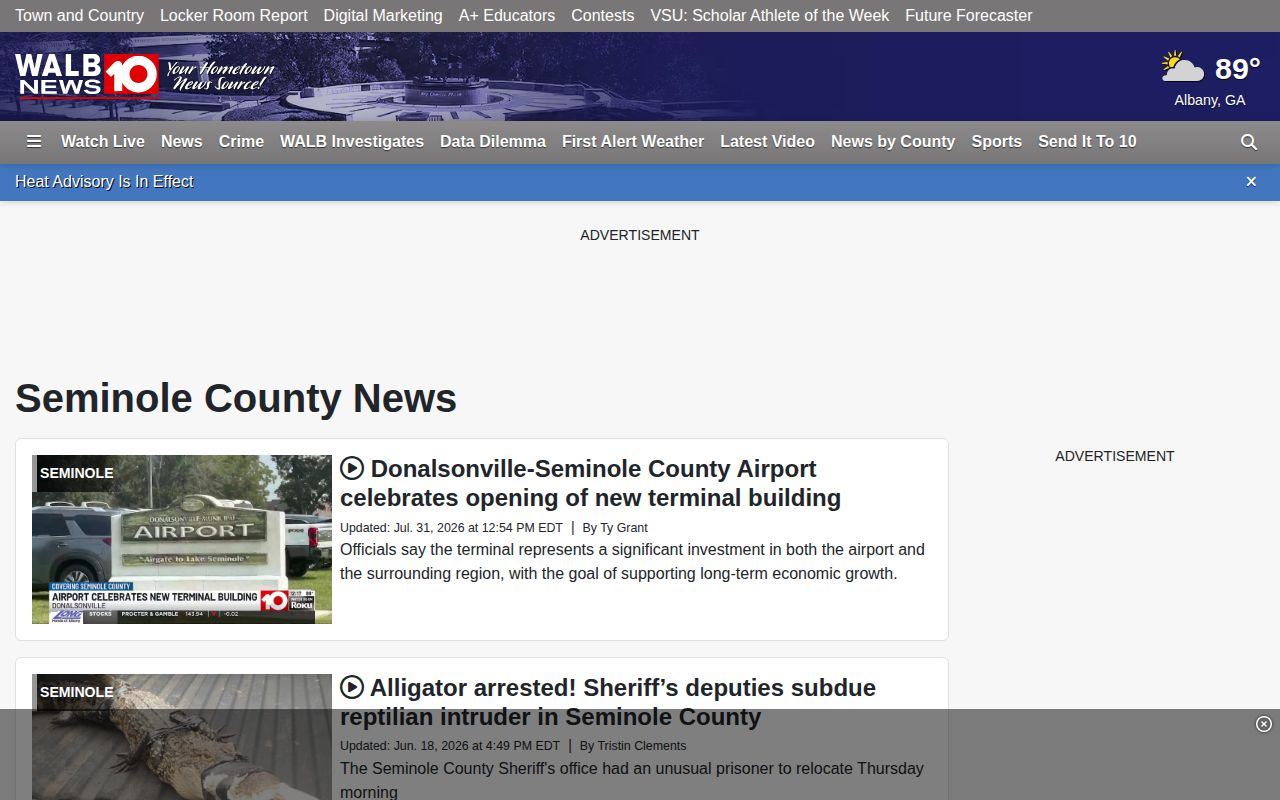
Start any Seminole County arrest search with the sheriff's roster. News indexes surface a few events, but custody data lives with the sheriff. Some unofficial sites also cover the county. RecentlyBooked and Mugshots.com both carry Seminole pages. The Georgia Gazette has a Seminole section as well. Their entries lag, linger after the portal updates, or skip what the court later decided. Arrests.org, BustedNewspaper, and Mugshots.zone publish no Georgia Seminole section, so skip their Florida pages entirely. A local-looking site called Seminole County Mugs lists no clear agency behind it. That makes it an unverified lead at best.
Recent Arrests by City
Two incorporated cities sit inside Seminole County. Donalsonville holds the county seat. It runs its own police department, though DPD arrestees are typically booked at Seminole County Jail. Because of that, the county portal lists DPD as the arresting agency on those rows. The Donalsonville Recent Arrests page also covers the city's separate incident-record request. Iron City posts no arrest feed of its own. The Iron City Recent Arrests page follows the county sheriff, jail, and records routes instead. The Georgia Legislature city population table sets that boundary.
The table keeps Jakin, an Early County municipality, out of Seminole County arrest results.
Seminole County Booking Record Fields
A booking record tracks a person's entry into the jail. It is not the incident report or warrant file. It is also not the indictment or court judgment. Each one answers a different question. The Seminole portal lists name, sex, height, weight, address, arrest date, arresting agency, days in jail, total bond, warrant number, charge counts, statute, description, and court. A status label separates current bookings from released historical rows. Descriptions can run stale or thin. Match more than a name before drawing any conclusion.
- Booking
- The jail intake and administrative record made after an arrest.
- Bond
- A court-set or preset condition that may permit release while a case continues.
- Arraignment
- A court stage at which charges and a plea are addressed.
- Disposition
- The later court result, such as dismissal, plea, or judgment.
- Record restriction
- Georgia's process for limiting eligible criminal-history access; it is not automatic destruction of every source.
Identity takes care. Line up the arrest date, agency, descriptors, address, warrant number, and court record before calling it a match. A released status does not mean dismissal. Release can follow bond, a transfer, time served, or another custody event, while the court docket is where a charge changes or resolves.
Seminole County Mugshots and Photos
The sheriff's roster has an image slot, but the picture resolves to a placeholder. RecentlyBooked states the county posts no booking photos. The portal shows no usable booking photo. That does not mean no photo exists. Ask SCSO for a specific photograph and booking report when a lawful copy is needed.
Georgia law shapes the answer. O.C.G.A. § 35-1-19 restricts how law-enforcement websites post booking photographs and bars distribution that feeds sites charging for removal. Requesters must affirm compliance. Juvenile rules, active investigations, victim protections, sealed material, and personal data can also block release.
The Georgia Department of Corrections search is a different animal. It covers state prison inmates, not new county bookings. It may show an offender photograph. Unofficial indexes like RecentlyBooked and Mugshots.com can hold old or thin material. Check them against SCSO and the court. Their no-fee correction policies promise nothing.
Photo access and record access are separate questions. A booking report can be open while its image stays withheld or sits behind the Georgia affirmation. An old news photo can also outlive its jail row. Note the source whenever you spot a discrepancy. For a court or records matter, request the copy from the holding agency instead of saving an unofficial image.
Request a Seminole Arrest Record
The SCSO records request page names Paula Whaley at pwhaley@seminoleso.org and (229) 524-5115. The form asks for contact details plus case, date, time, and location information. Pick Incident Report, Accident Report, Booking Report, or video. No fixed photo fee or production date is posted.
- Name one person and give a narrow arrest or booking date range.
- Identify the agency and ask for the exact booking report, photo, incident report, or other existing record.
- Add a case or booking number when known, plus alternate spelling needed to locate the file.
- Ask for an electronic copy, an itemized cost estimate, and the expected production date.
- If access is denied, request the statutory basis and any segregable, non-exempt portion.
Georgia law sets a rhythm for records requests. An agency usually hands over the record, or explains in writing what is available, within three business days of a Seminole County arrest records request. Nothing obliges the office to build a new report. Fees stay modest. Donalsonville's city form charges ten cents a page. The first fifteen minutes of staff time are free. Bigger jobs get billed at an administrative salary rate. That city language only covers the city, so treat it as one price among several. Custody depends on which record you want. Donalsonville police hold the city incident file. SCSO holds the county jail booking report. The clerk keeps what the court filed later. A single request can miss two of the three, so file separately with each office. When an agency holds nothing responsive, ask it to point you toward the likelier custodian. Keep every reply alongside your original letter. Booking photos need special wording. Name the image plainly in the request, and note that § 35-1-19 limits what a sheriff may release. Mistakes happen in official entries too. Ask the custodian to fix the record and attach the court disposition or proof of identity. Georgia record restriction can close off qualifying records, yet copies may survive with jails, courts, news outlets, and vendors. The state Attorney General describes free commercial mugshot removal rights in listed outcomes, so use each site's written process. Paying a suppression service buys you nothing the law does not already give you.
Georgia Arrest Records Law
Georgia's Open Records Act reaches far. Under O.C.G.A. §§ 50-18-70 et seq., documents, photographs, and data held by public agencies are open unless an exemption applies. That openness has limits, though. Juvenile details, active investigations, confidential sources, victim information, medical data, personal identifiers, and restricted records can all be redacted or withheld from a Seminole County arrest file.
Retention schedules tell you how long arrest records live. The Georgia Archives list keeps daily incarceration lists for one year. Jail booking records survive ten years after release. Jail registers also last ten years after the final entry. Those periods govern the record series, not what InteropWeb shows the public. Holding-cell video has just a 180-day schedule. When a record vanishes online, that proves nothing about destruction. A retention period never promises the item stays searchable in the same form. Ask SCSO which schedule applies. Also ask whether the county, a vendor, or another custodian holds it.
Seminole Warrants and Wanted Notices
SCSO publishes no online warrant-search form and no current most-wanted page. Seminole County also sits outside the Georgia Magistrate Records participating-court and arrest-warrant lists. A statewide screen that skips the county is not a clean result. Call SCSO at (229) 524-5115 and ask for the warrant unit. The Georgia Sheriffs Association directory lists extension 7107. Confirm that extension by phone before relying on it. The clerk can also check court-issued status. Anyone who might be named on a warrant should talk with an attorney or the court. Aim for a safe, lawful resolution. Walking into an office can mean immediate custody. Never approach a person in a wanted notice yourself. Dial 911 for danger, or the non-emergency line for other tips. The portal's Warrant # field covers only the booking on screen. Treat it as a detail, not a full search.
After a Seminole County Arrest
What happens right after a Seminole County arrest? SCSO's jail FAQ says an arrest on a warrant brings a first appearance before a Magistrate Judge. That appearance covers bond. Some Municipal or Probate Court citations carry a preset bond instead. Cash, property, and bail bondsmen are the usual routes. A cash bond adds a twenty-dollar non-refundable fee, except in Municipal Court. The portal's Total Bond field is one clue only. It is not the full bond order, and it promises nothing about release. The real story unfolds in the court file. Georgia Courts eAccess includes Seminole Superior Court in its statewide access. The GSCCCC listing places the courthouse at 200 South Knox Avenue in Donalsonville. The main number is (229) 524-2525. Search the right court level, or ask the clerk when a matter is not online. The booking charge can differ from what a prosecutor later files. The GSCCCA Seminole clerk listing gives the official contact path. Use it for anything that follows a booking.
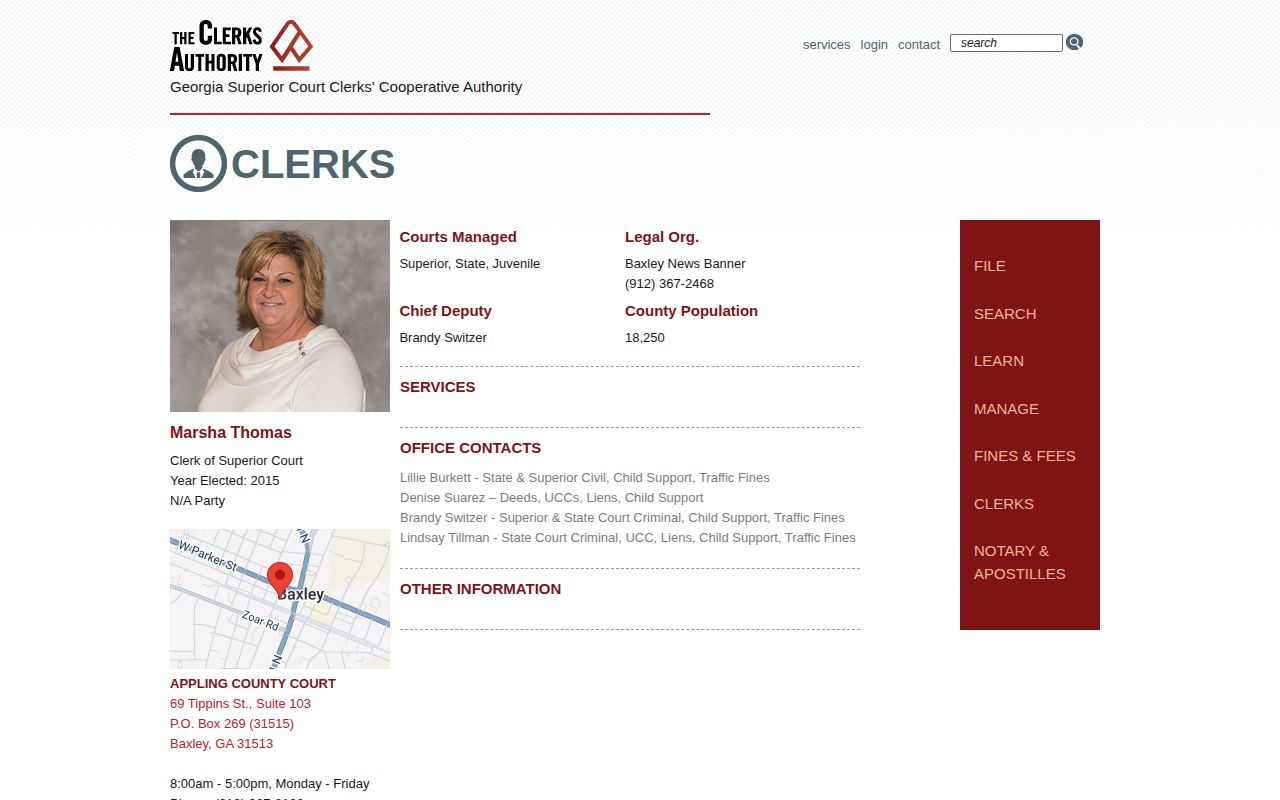
That listing helps route a court inquiry after a Seminole arrest. It does not replace the docket or establish a disposition on its own.
| Record state | What it means |
|---|---|
| Just booked | Intake may still be processing and web data can lag. |
| Currently booked | The jail portal shows present custody, not guilt. |
| Released | County custody ended or changed; the case may continue. |
| Court disposition | The filed case shows dismissal, plea, trial result, or other resolution. |
Beyond Seminole County Custody
State records pick up where the Seminole County jail roster ends. The Georgia Department of Corrections offender search tracks people in state custody or under state supervision. It works with a name or an offender identifier. A photograph may appear in the result. A name can vanish from the county roster after sentencing or a transfer. GDC is the next place to look. Just keep the two records straight: a county booking is one thing. A state offender file is another. Federal systems sit on a separate track. The Bureau of Prisons locator covers federal inmates back to 1982. It shows location, release date, and identifiers, though its public screen has no booking-photo field. ICE's Online Detainee Locator takes a nine-digit A-number paired with a country of birth. Exact biographical details also work. It will not search anyone under eighteen. The U.S. Marshals warrant system stays internal and feeds no public Seminole arrest roster. A move between systems can explain a sudden county status change. Only the responsible agency or court can confirm it. Which photo record applies? A county intake image, a GDC offender photo, and a news image are three different records. Each serves a different purpose. The Seminole booking-photo section sorts out what each one actually shows.